Amazon's New EPC Update: How Influencers Can Now Get Paid Per Click (No Purchase Required)
The complete guide to Amazon's Earnings Per Click campaigns inside Creator Connections, and the exact Facebook Deal Group strategy to maximize every 10-day sprint in 2026.
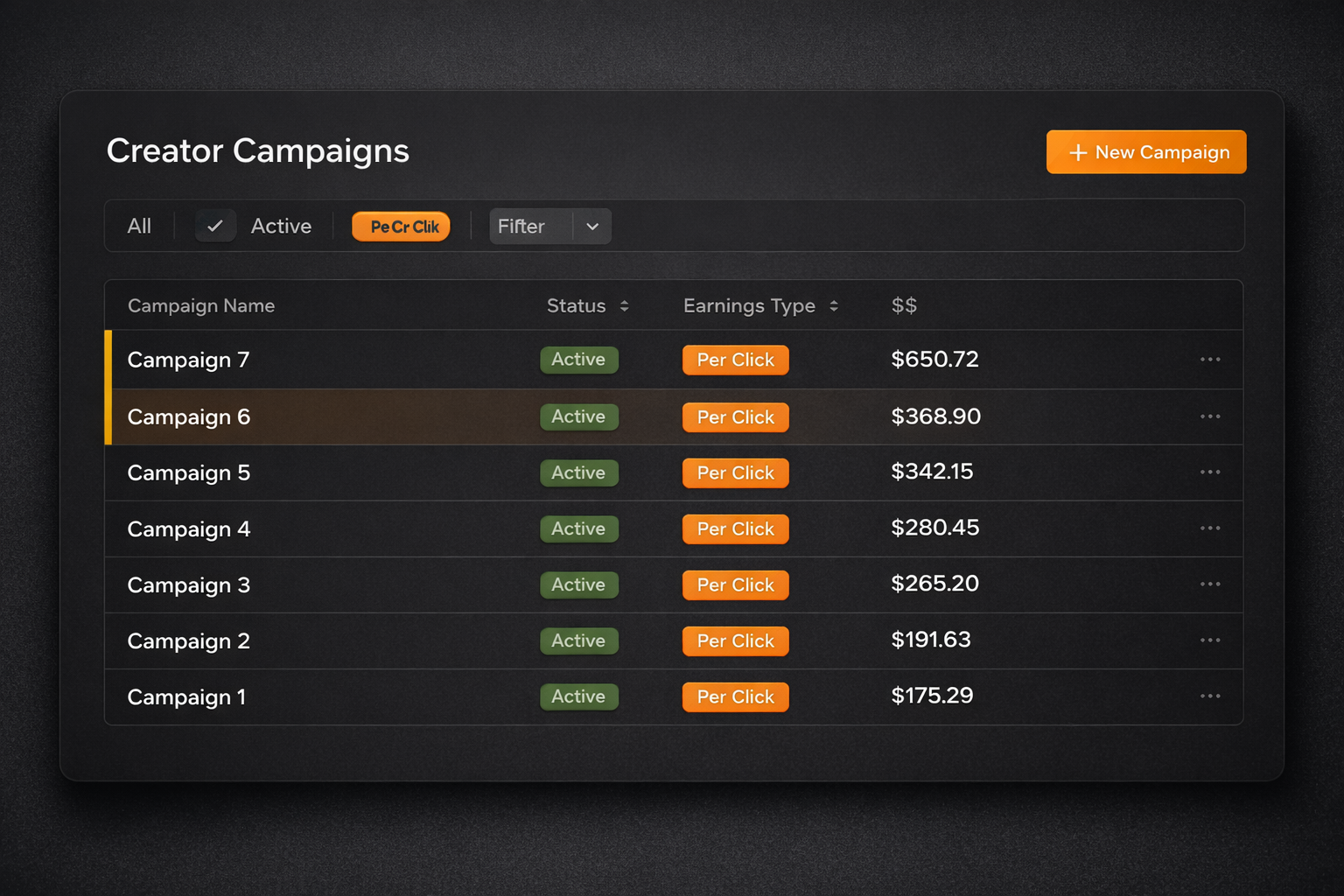
The Problem: The traditional Amazon Influencer model has a brutal bottleneck, you only get paid when someone actually buys. That means a video could generate 10,000 clicks and if nobody completes a purchase, your earnings report shows $0.00.
The 2026 Update: Amazon has quietly rolled out EPC (Earnings Per Click) campaigns inside Creator Connections, a brand-new compensation model where influencers earn revenue for every qualifying click on a product link, regardless of whether a purchase happens.
The Opportunity: Early adopters in the r/Amazon_Influencer community are reporting click revenue appearing in their dashboards within 24 hours of joining campaigns. Most campaigns run for just ~10 days, creating a fast-paced sprint model that rewards speed and volume over long-form SEO content. Combined with a properly built Facebook Deal Group, this creates an entirely new income stream.
1. What Are Amazon's EPC (Earnings Per Click) Campaigns?
If you've been in the Amazon Influencer space for any amount of time, you know the standard deal: you create content, share your affiliate link, someone clicks it, they buy something within 24 hours, and you get a commission. No sale, no pay.
Amazon's EPC campaigns, officially listed as "Sponsored Products for Creators" inside the Creator Connections dashboard, flip that model. Brands are now funding campaigns where the click itself is the billable event. You drive traffic to the product listing, and you earn a set amount per qualifying click, regardless of whether the customer adds anything to their cart.
Here's how it works in practice:
- A brand creates an EPC campaign inside Creator Connections with a set budget and a per-click payout rate.
- You accept the campaign through your Creator Connections dashboard (or let a tool like Agent Oink auto-accept it for you).
- You share your standard affiliate link, the same Associates link you already use. No special tracking URL required.
- Every qualifying click is tracked and paid. Revenue shows up in your Reporting Dashboard, often within 24 hours.
- Campaign ends when the budget is exhausted or the campaign window closes (typically ~10 days).
Why This Matters for Amazon Influencers in 2026
The traditional commission model punishes influencers who drive high-traffic, low-conversion content. If you're posting deals on social media, particularly TikTok and Instagram Reels, your audience often clicks, browses, and bounces. With standard commissions, all that traffic was worth exactly zero.
EPC campaigns change the math entirely. Every click has value. This is particularly powerful for influencers who have built large, engaged audiences on social platforms where impulse browsing is the norm. If you can generate 500 clicks on a product link in a 10-day window, you're getting paid for all 500, even if only 10 people actually buy.
2. EPC vs. Traditional Amazon Commissions: A Side-by-Side Breakdown
To understand why this update is so significant, let's compare the two models with real numbers.
| Factor | Traditional Commission | EPC Campaign |
|---|---|---|
| How You Earn | Purchase required within 24 hours | Paid per qualifying click |
| Revenue Visibility | Delayed until item ships | Within ~24 hours of click |
| Campaign Duration | Ongoing (no expiry) | ~10 days average |
| Tracking Link | Standard Associates link | Standard Associates link (same link works) |
| Content Submission | Not required | Recommended, not required for payout |
| Best Content Type | Long-form reviews, YouTube SEO | Short-form, high-velocity social posts |
| Risk | Low (no penalty for low sales) | Zero (no penalty for low clicks either) |
| Ideal Platform | YouTube, Blog, Amazon Storefront | TikTok, Reels, Facebook Groups, Telegram |
The Math: Why EPC Can Outperform Traditional Commissions on Social
Let's run the numbers with a realistic scenario:
Scenario: You promote a $79 kitchen gadget on Instagram Reels.
| Metric | Traditional Commission | EPC Campaign |
|---|---|---|
| Total Clicks Generated | 400 | 400 |
| Conversion Rate (Social Traffic) | ~3% | N/A (clicks = revenue) |
| Purchases | 12 | N/A |
| Commission Rate | 4% ($3.16/sale) | ~$0.15-0.50/click |
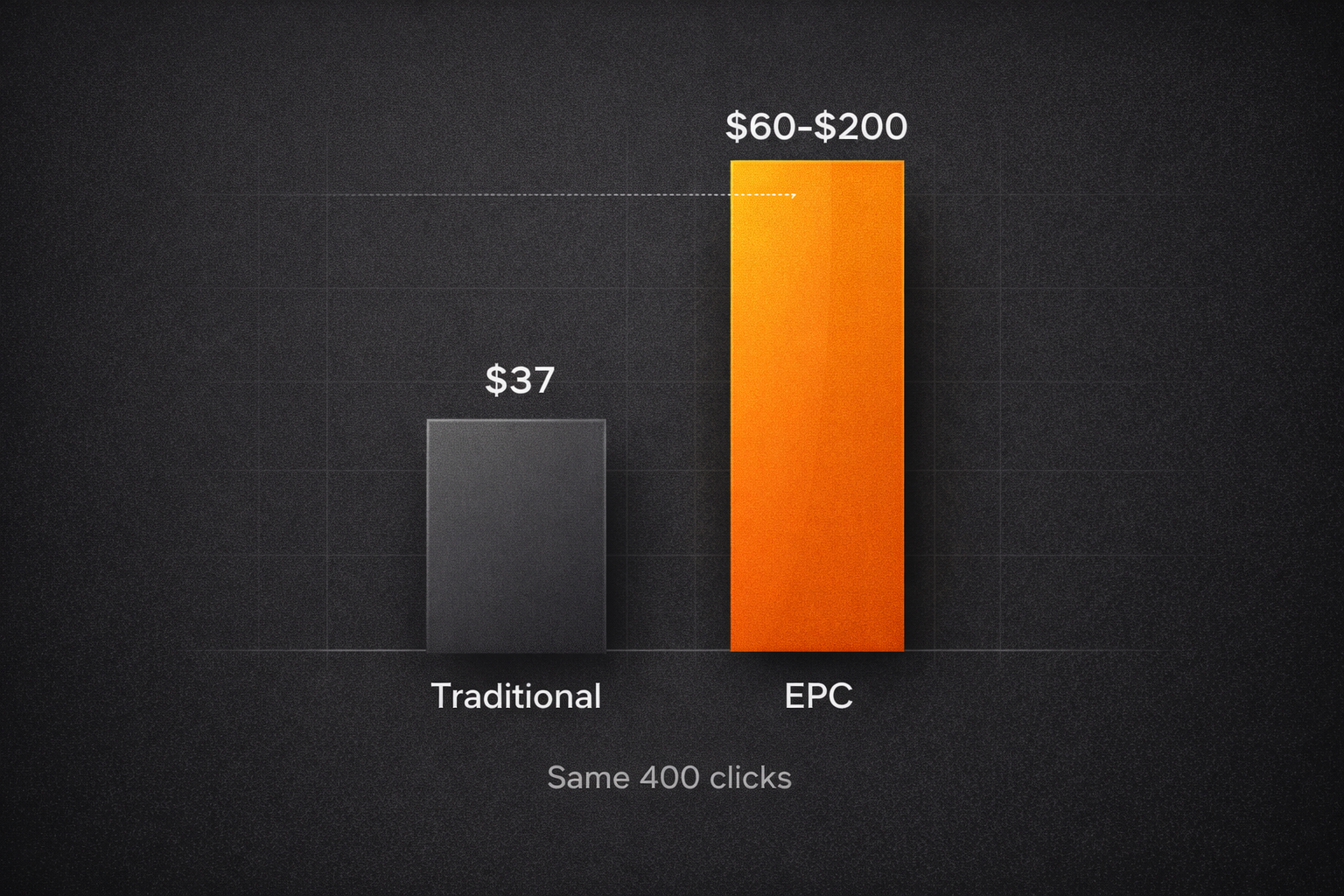
| Total Earnings | $37.92 | $60 - $200 |
The numbers speak for themselves. For social media influencers driving high-volume traffic with lower conversion rates, EPC campaigns can deliver 2-5x higher earnings on the same content effort.
3. What the Reddit Community Has Verified About EPC Campaigns
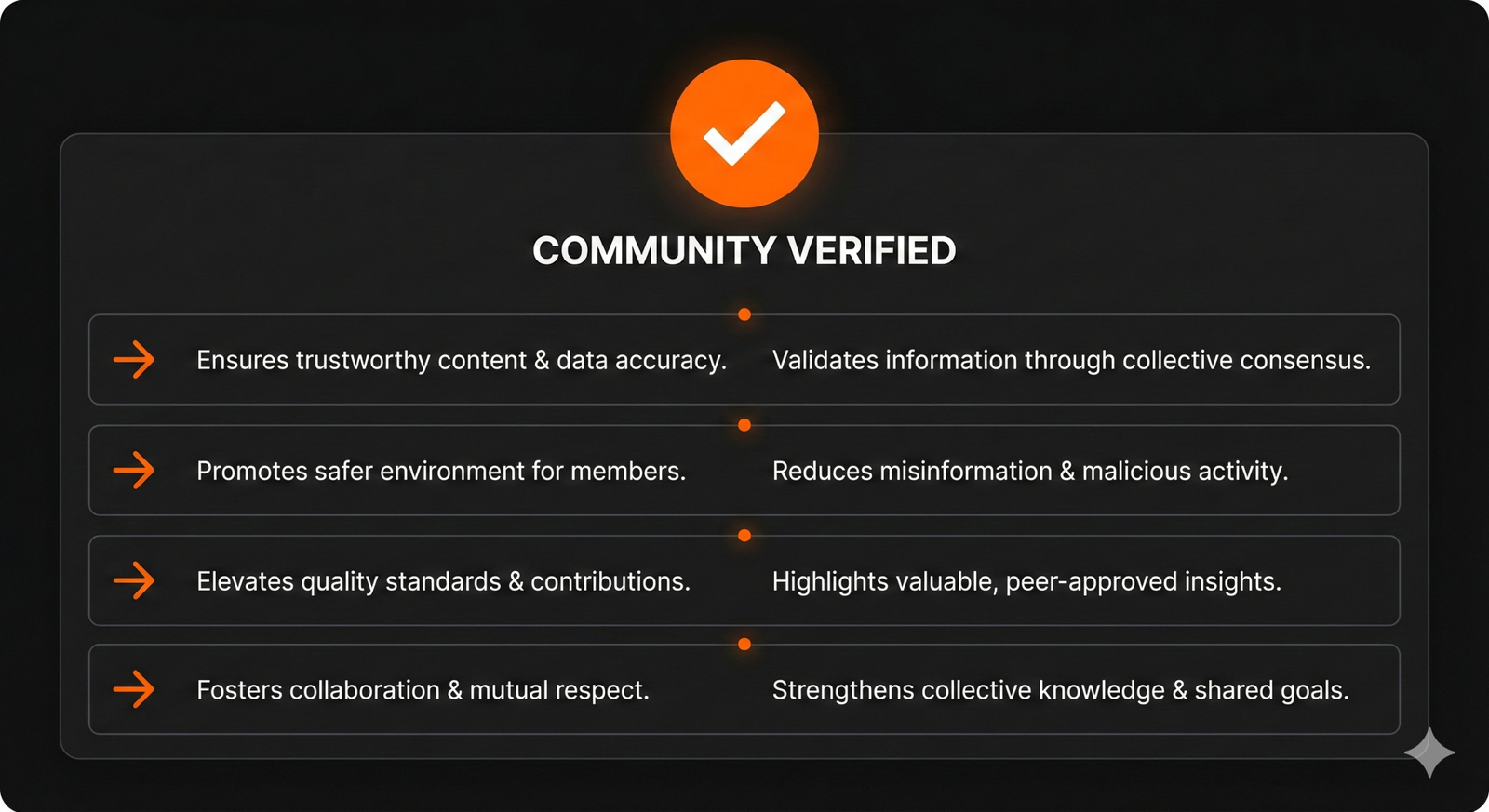
Amazon's official documentation on these campaigns is, predictably, vague. But the r/Amazon_Influencer community has been testing, verifying, and sharing real-world findings since these campaigns started appearing. Here's what they've confirmed:
Fact #1: You Don't Need the "Ref" Tracking Link
When you accept an EPC campaign in the Creator Connections dashboard, Amazon provides a specific tracking link, usually containing something like ref=t_ac_spc_accepted_tile. Multiple influencers in the community have verified that you do not need to use this exact link.
Any properly generated standard Associates link with your associate tag will track your clicks just fine. This is a big deal because it means you don't need to go back and update old posts, swap out links in your bio, or re-do any existing content. Your existing links already work.
Fact #2: Submitting Content Links is Recommended, Not Required
This was causing serious panic in the community. Campaign descriptions include language like: "A content link must be uploaded before campaign end date." Many influencers interpreted this as a hard requirement, submit the URL of your social post or forfeit your earnings.
Influencers who contacted Amazon Customer Service directly have confirmed: submitting content links is recommended, but your standard Associate link inherently tracks the clicks. You will still receive your EPC revenue even if you forget to manually submit the content link before the campaign ends.
Fact #3: Click Revenue Shows Up Within ~24 Hours
Unlike standard Amazon commission reporting, which is delayed until the item actually ships (sometimes 3-7 days later), creators are reporting that EPC click revenue appears in the Reporting Dashboard within roughly 24 hours of joining a campaign and driving traffic.
This near-real-time feedback loop is incredibly valuable because it lets you see which campaigns are generating revenue and double down immediately, rather than waiting days to find out if something worked.
Fact #4: Most Campaigns Run for Only ~10 Days
This is probably the most critical insight for your strategy. The average EPC campaign window is approximately 10 days. That's it. The brand sets a budget and a time window, and when either runs out, the campaign ends.
This tight timeline has massive implications for the type of content you should create. Traditional long-form content. YouTube reviews that take weeks to rank, SEO blog posts that need months of backlinks, is simply too slow for this model. You need high-velocity, high-reach content that generates clicks immediately.
4. The 10-Day Sprint: Why This Changes Your Entire Content Strategy
Let me be direct: if you're approaching EPC campaigns the same way you approach regular Creator Connections, you're going to leave money on the table.
Standard Creator Connections campaigns are commission-based and evergreen, your video sits on a product page and earns for months. EPC campaigns are sprints. You have a narrow window to drive maximum clicks before the budget evaporates.
What Works for 10-Day EPC Campaigns
| Content Type | Speed to Clicks | EPC Suitability |
|---|---|---|
| YouTube Long-Form Review | Weeks to rank | ❌ Too slow |
| SEO Blog Post | Weeks to months | ❌ Too slow |
| TikTok / Instagram Reel | 24-48 hours | ✅ Good |
| Facebook Deal Group Post | Immediate (minutes) | ✅✅ Best |
| Telegram Deal Channel | Immediate (minutes) | ✅✅ Best |
| Email Newsletter | Same day | ✅ Good |
| Pinterest Pin | Days to weeks | ❌ Too slow |
See the pattern? Direct-audience channels, where you control the distribution and don't rely on an algorithm to surface your content, are the clear winners for EPC campaigns. A Facebook Group post reaches your members immediately. A Telegram notification hits their phone in seconds. That's the speed you need for a 10-day sprint.
The Velocity Formula
Here's the simple framework I recommend for every EPC campaign:
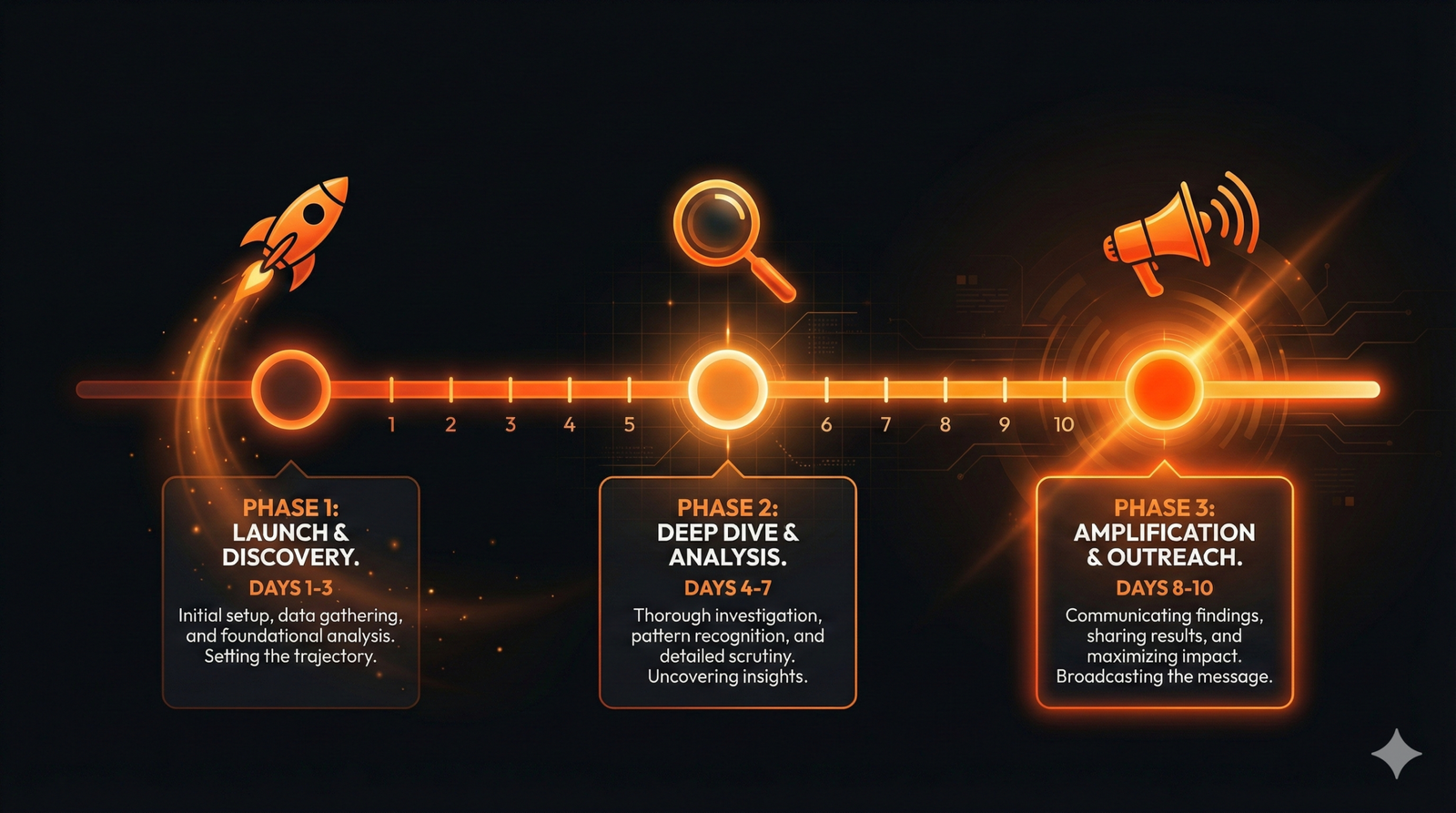
- Day 1: Accept the campaign (or let Oink auto-accept). Grab your standard affiliate link. Post to your Facebook Deal Group and Telegram channel immediately.
- Day 2-3: Create a TikTok/Reel about the product with a strong hook. Use ManyChat to funnel commenters into your Deal Group.
- Day 4-7: Monitor click performance. "Bump" top-performing posts in your group. Create a second piece of content if the product is resonating.
- Day 8-10: Final push. Post urgency-driven content ("Last chance at this deal"). Reply to old comments to resurface posts in group feeds.
5. Essential Tools: Agent Oink and Viral Vue for EPC Campaigns
Manually checking the Creator Connections dashboard multiple times per day for new EPC campaigns is technically possible, but realistically unsustainable. Here's why the right tools are non-negotiable in 2026.
Agent Oink (Chrome Extension)
What it does: Oink is a Chrome extension built specifically for Amazon Influencers. It connects to your Storefront, your Orders, and Creator Connections, then scans everything to find campaigns you should be earning from. Its most powerful feature for EPC is the auto-accept function, when a new EPC campaign appears that matches your criteria, Oink can accept it for you automatically.
Why it matters for EPC: Since most EPC campaigns only last ~10 days, every hour you delay accepting a campaign is time you're not earning. Oink eliminates that lag entirely.
Pricing: Free tier available. Pro is $249/year (often covered by the additional earnings within the first week of use).
Viral Vue
What it does: Viral Vue is a product research and outreach platform that helps you find Creator Connections campaigns, analyze product performance, and send bulk messages to brands. It's particularly strong at identifying which products in your existing storefront have active campaigns you haven't accepted yet.
Why it matters for EPC: Viral Vue's research capabilities let you prioritize which EPC campaigns to actively promote versus which to just passively accept. If a product has strong social engagement metrics, it's worth creating dedicated content for the EPC sprint.
Pricing: $790/year. Code "WELCOME10" gets 10% off.
| Feature | Agent Oink | Viral Vue |
|---|---|---|
| Auto-Accept Campaigns | ✅ Yes (Pro) | ❌ No |
| Storefront Scanning | ✅ Yes | ✅ Yes |
| Product Research | ✅ Basic | ✅ Advanced |
| Brand Messaging | ✅ Unlimited (Pro) | ✅ Bulk Outreach |
| Today's Sales Check | ✅ Yes (Pro) | ❌ No |
| Best For EPC | Speed & automation | Research & targeting |
| Price | Free / $249/yr (Pro) | $790/yr |
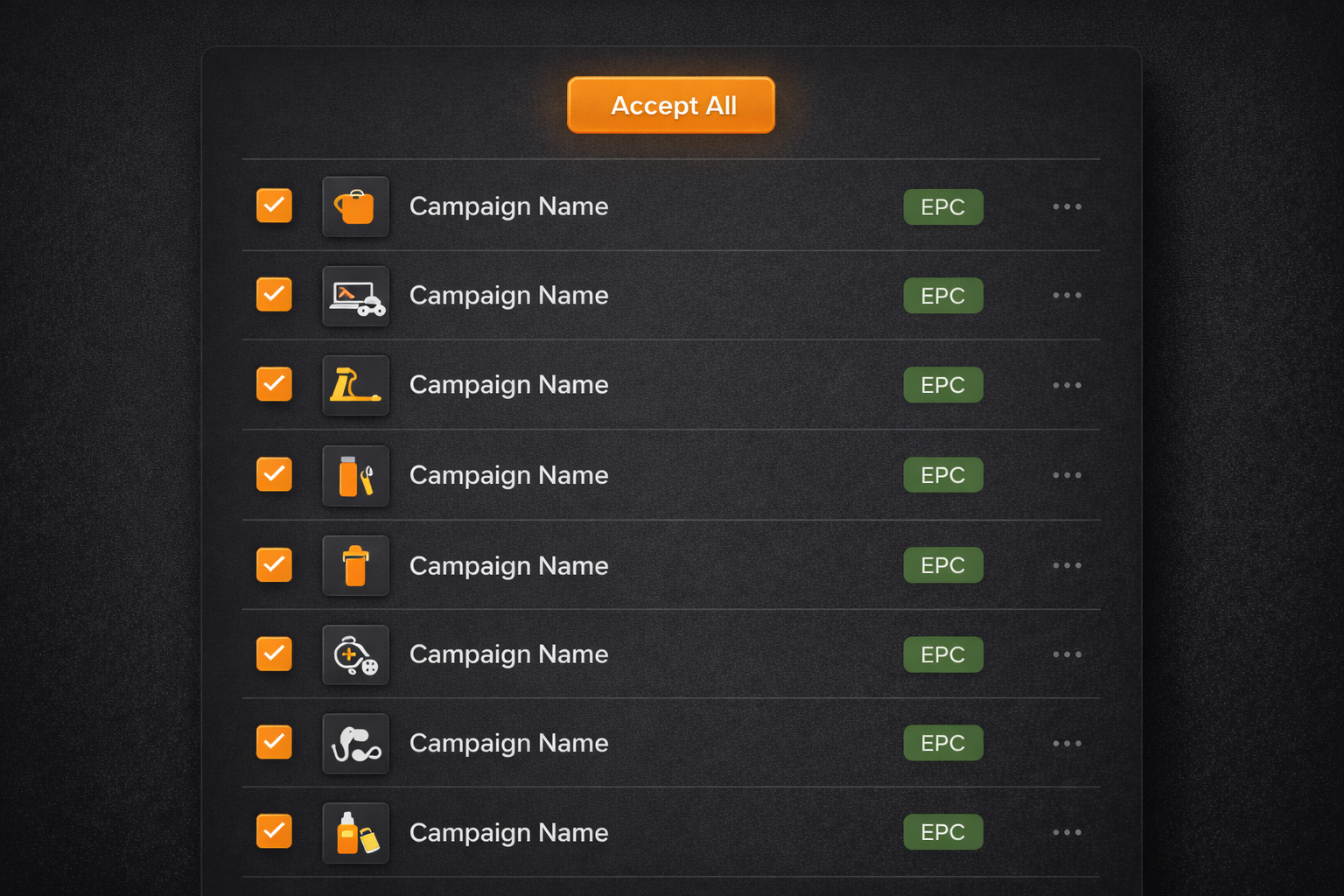
6. The "Accept All" Strategy: Why You Should Say Yes to Every EPC Campaign
This is the strategy that experienced influencers in the community are converging on, and the logic is bulletproof once you understand it.
The principle: Since there is no penalty for accepting an EPC campaign and not driving traffic, you should accept every single click-based campaign that appears in your dashboard.
Here's why this works:
- Passive capture from existing content: If you have 200+ videos on your Amazon Storefront and an older video suddenly gets traction (algorithm boost, seasonal search spike, someone shares it), and that product happens to have an active EPC campaign you've already accepted, you capture the click revenue automatically without planning for it.
- Zero downside risk: Unlike commission-based campaigns where poor performance could theoretically affect your Creator Stars standing, EPC campaigns have no penalty for low click volumes. The worst case is you earn $0 from a campaign. That's the same as not accepting it.
- Speed advantage: Auto-accepting everything means you're in the campaign from day 1. If you manually evaluate each one, you might not join until day 3 or 4, burning 30-40% of the campaign window.
7. The Facebook Deal Group Blueprint: Your EPC Revenue Engine
This is where the real money is. A dedicated Facebook Deal Group is arguably the most powerful channel to exploit 10-day EPC campaigns because you own the distribution. No algorithm. No hoping your Reel goes viral. You post, your members get a notification, they click. That's it.
Phase 1: Group Setup & Optimization
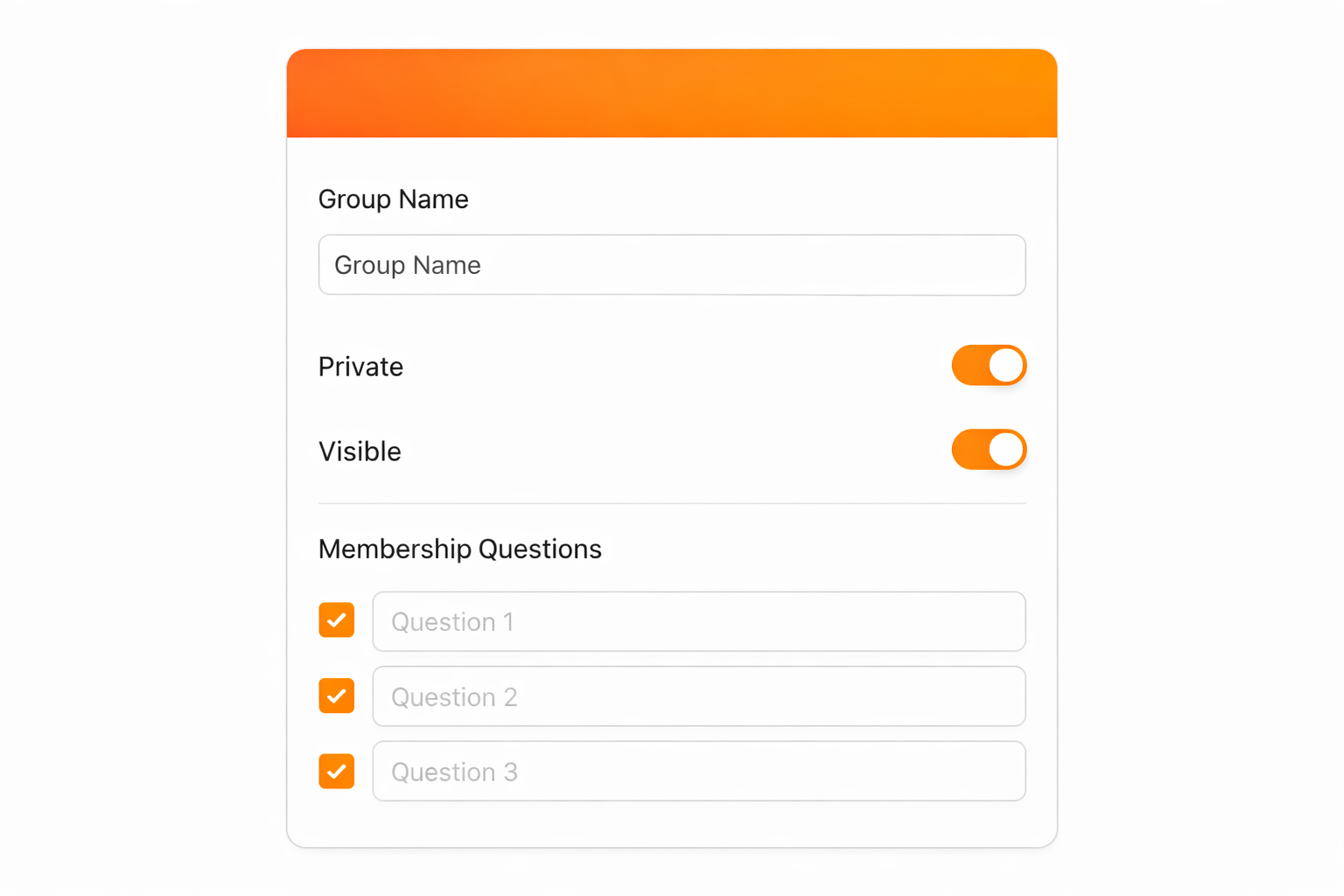
The group name, privacy settings, and entry questions all matter more than most people realize.
Name for Search, Not Branding: Don't name it "Sarah's Favorites" or "Miles's Top Picks." Name it something highly searchable like "Daily Amazon Deals, Glitches & Promo Codes 2026." This ensures your group appears when people actively search Facebook for deal communities, free organic growth on autopilot.
Set it to "Private" but "Visible": This is a crucial psychological lever. Making the group private creates a sense of exclusivity, people feel like they're getting access to insider information. But keeping it visible ensures it shows up in Facebook search results. You get the best of both worlds: perceived scarcity driving join rates, with full discoverability.
The 3-Question Gateway: Require new members to answer questions before joining. This serves two purposes: it filters out spam bots, and it builds your email list in the background. Here's the exact question set I recommend:
- "Do you want me to tag you when I find extreme price glitches?" (Builds engagement expectations)
- "What's your email for our weekly top-10 deals list?" (Passive email list building)
- "What types of products are you most interested in?" (Audience research for targeting future content)
Phase 2: Growing Your Group (The Funnel)
You can't just invite your friends and expect this to work at scale. You need a high-velocity funnel from your short-form content (TikTok, Reels, YouTube Shorts) directly into the group.
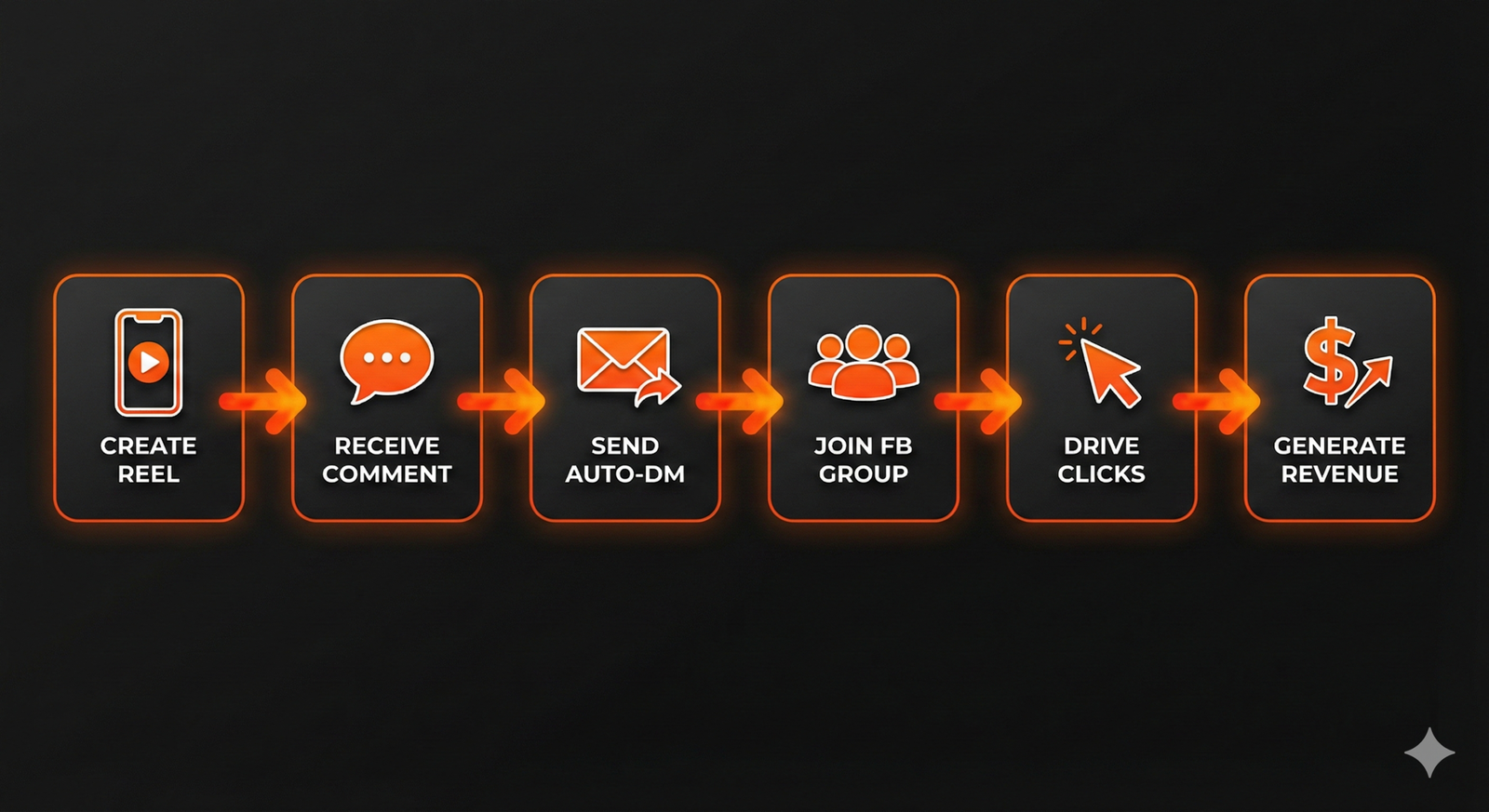
The key insight here is that your social media content becomes the top-of-funnel that feeds your Facebook Group, which becomes the click engine for EPC campaigns. The Reel gets views, the group gets members, the group posts get clicks, and the clicks get paid.
Here's the funnel in visual terms:
TikTok/Reels (reach) → ManyChat DM (conversion) → Facebook Group (retention) → EPC Link Posts (revenue) → Repeat
Phase 3: The Daily EPC Posting Formula
When Agent Oink auto-accepts an EPC campaign, you need a system for posting it to your group. Do not just drop a raw link with a product photo. That's the fastest way to train your audience to ignore your posts.
Use this exact psychological structure for every EPC deal post:
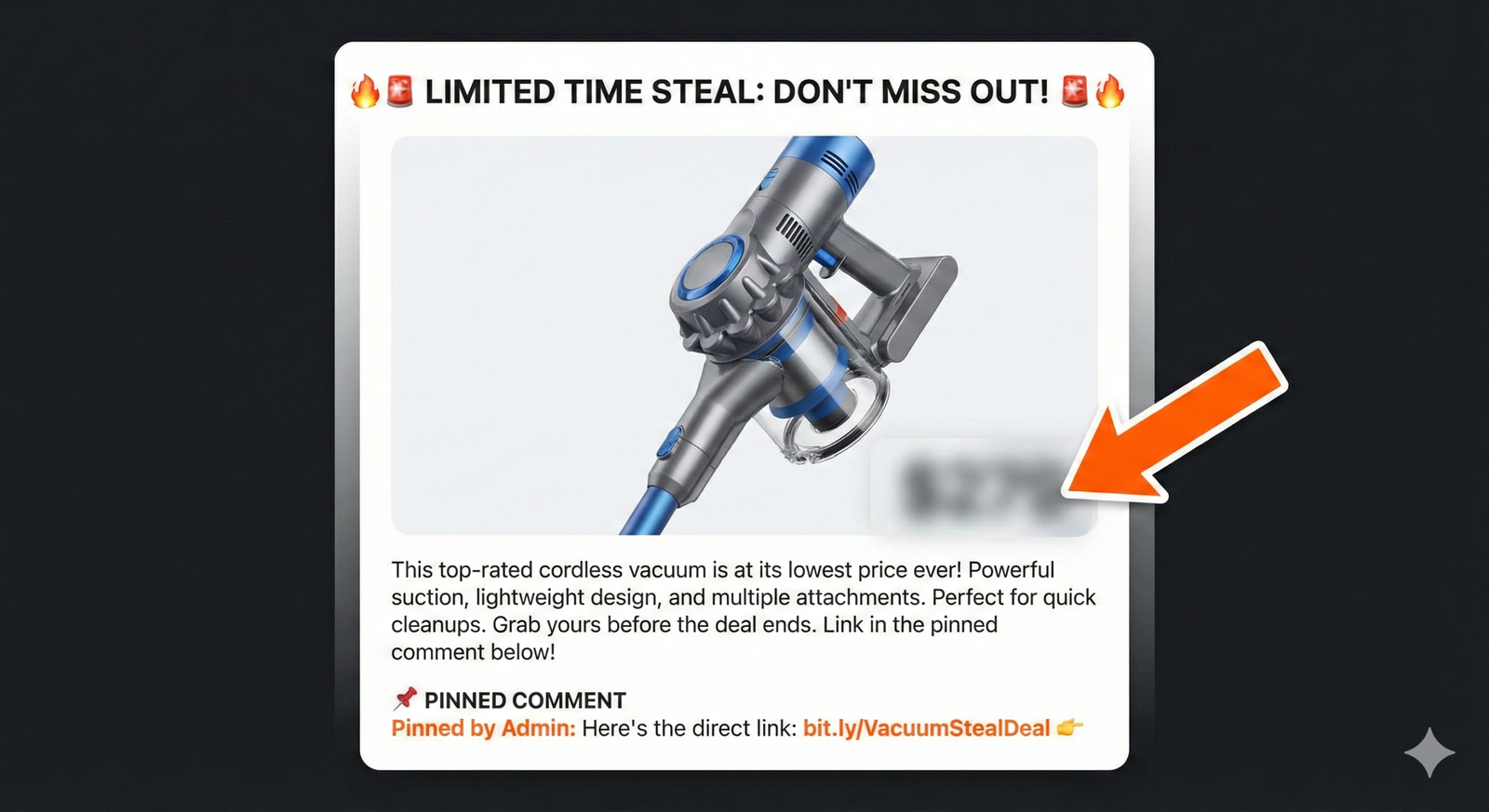
Step 1. The "Blind" Image: Use Canva (free) to create an image of the product, but blur out the price or put a giant red arrow pointing to a key feature. The incomplete visual creates curiosity and forces the click.
Step 2. The Urgency Headline: Lead with emojis and urgency. Example: "🚨 GLITCH OR MASSIVE SALE?! I have never seen this Name-Brand Vacuum drop this low. 🚨"
Step 3. The Curiosity Gap CTA: Do not reveal the price in the text. Example: "There's a hidden clippable coupon on the page. I don't know how long this will last. Click below to see if the coupon is still active and let me know in the comments if you got it!"
Step 4. Link Placement: Put your standard Amazon affiliate link in the main post body, but also pin it as the top comment. Facebook's algorithm sometimes suppresses posts with links in the main text, so the pinned comment acts as your safety net. Both links will track your EPC clicks.
8. The ManyChat Auto-DM Strategy: Turn Reels Into Group Members
Stop telling people to "click the link in my bio." In 2026, the conversion rate on link-in-bio is declining across every platform. There's simply too much friction: they have to stop watching, navigate to your profile, find the link, click it, and then figure out what they're looking at.
ManyChat eliminates all of that friction.
How It Works
- Post a Reel about a crazy Amazon find. At the end, say: "Comment the word 'DEAL' and I'll DM you the invite to my private deal group where I posted the link."
- ManyChat detects the keyword ("DEAL") in the comments and automatically sends a DM to anyone who comments it.
- The DM contains your Facebook Group invite link along with a short personal message. Example: "Hey! Here's the link to my private Amazon Deal Group. I post price glitches, hidden coupons, and exclusive deals every day. Join here: [group link]"
- The commenter joins your group, and every future EPC campaign post reaches them directly.
Why This Creates a Viral Loop
Here's the part most people miss: when your audience comments "DEAL" on your Reel, it spikes your engagement metrics. Instagram and TikTok's algorithms interpret high comment volume as a signal that the content is interesting, which pushes your Reel to more people. More people see it, more people comment "DEAL," more DMs go out, more group members join.
One Reel can generate hundreds of group joins in a single day if the content resonates. And every one of those new members is now in your EPC click funnel permanently.
| ManyChat Plan | Price | Best For |
|---|---|---|
| Free | $0/month (up to 1,000 contacts) | Getting started, testing the concept |
| Pro | $15-65/month (contact-based) | Scaling across all posts/Reels |
🔍 Find Your Next EPC Winner with Viral Vue
I use Viral Vue daily to research which Creator Connections products are worth creating dedicated content for. It shows you real performance data, monthly sales, commission rates, carousel competition, so you're not guessing which EPC campaigns to actively promote.
If you're serious about turning EPC campaigns into a consistent income stream, Viral Vue's product research is worth every penny.
Try Viral Vue →Affiliate link. I may earn a commission if you sign up through this link. I genuinely use and recommend this tool. FTC disclosure: this is a paid partnership.
9. Why Deep Linking Is Critical for EPC Campaigns in 2026
This is a technical detail that most influencers skip, and it's costing them significant click revenue.
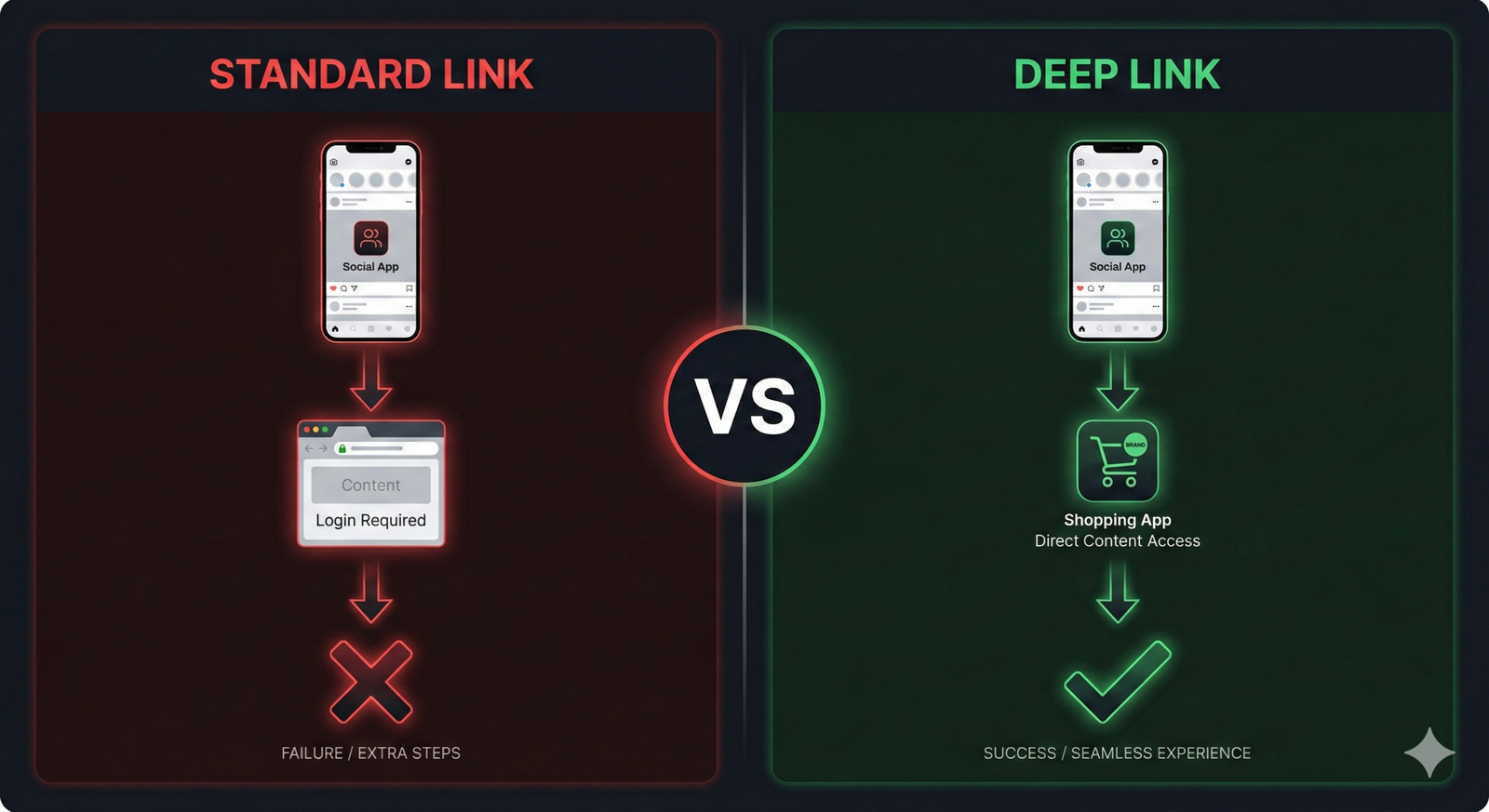
When someone clicks your Amazon affiliate link from a social media app (Instagram, TikTok, Facebook), the link typically opens in the app's built-in internal browser. This creates two major problems:
- Login friction: The user may not be logged into Amazon in the in-app browser, which means they need to re-enter their credentials. Many people don't bother, and you lose the click entirely.
- Cart friction: Even if they browse, the in-app browser doesn't have their saved payment methods, addresses, or Prime benefits readily accessible. Conversion rates drop dramatically.
For EPC campaigns specifically, the login issue is the bigger problem. If the user can't even load the product page because they're stuck at a login screen, that click may not register as a qualifying click at all.
The Solution: Deep Linking Tools
Deep linking tools like iTraky or Geniuslink solve this by forcing the Amazon native app to open on the user's phone when they click your link. The user is already logged in to the Amazon app, their payment methods are saved, and the experience is seamless.
Deep-linking vendors like iTraky publish their own estimates here (iTraky cites up to 30-50% more conversions from routing around the in-app-browser login wall); treat that as a vendor-reported figure to verify against your own before-and-after numbers, not an independently audited stat. For EPC campaigns where every click counts, even a partial version of that lift compounds fast.
10. The Daily Posting Formula for Your Deal Group
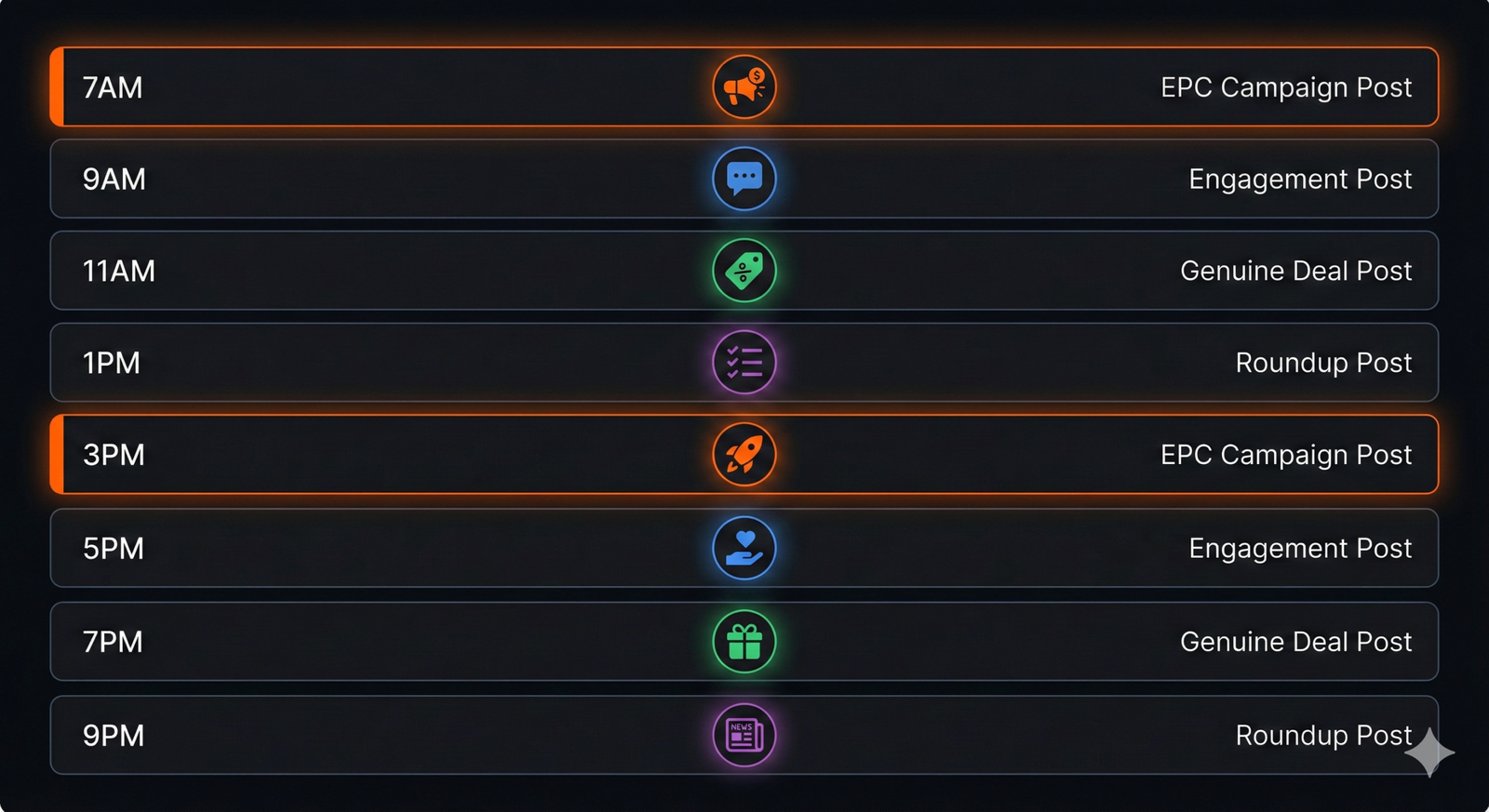
Once your Facebook Deal Group is live and growing, your posting cadence becomes your revenue lever. Here's the exact formula I recommend:
Daily Posting Schedule (5-8 Posts Per Day)
| Time | Post Type | Purpose |
|---|---|---|
| 7:00 AM | ⚡ "Morning Deals Drop" | Genuine deals (builds trust) |
| 9:00 AM | 🚨 EPC Campaign Product | Active EPC campaign (revenue) |
| 11:00 AM | 💬 "What Are You Looking For?" | Engagement & audience research |
| 1:00 PM | 🔥 Price Glitch Alert | Genuine value (builds trust) |
| 3:00 PM | 🚨 EPC Campaign Product #2 | Active EPC campaign (revenue) |
| 5:00 PM | ⭐ "Product I've Been Using" | Personal recommendation (trust) |
| 7:00 PM | 📦 "Deal of the Day" Roundup | Standard affiliate links (commission) |
| 9:00 PM | 🔁 "Last Chance" Bump | Resurface best EPC post of the day |
Notice the ratio: roughly 2-3 EPC campaign posts per day, mixed with 5-6 genuine value posts. This maintains trust while driving revenue.
The "Bump" Method for Expiring Campaigns
If an EPC campaign is performing well and you only have 2-3 days left, you don't need to create a brand new post. Go back to your original post in the group and reply to 5-6 old comments. Something simple like: "Update: this deal is STILL live! Crazy it hasn't sold out yet."
This activity "bumps" the post back to the top of the Facebook Group feed without you having to write an entirely new post. It's the fastest way to squeeze remaining clicks out of an expiring campaign.
11. Managing Multiple 10-Day Sprints Without Burning Out
Here's the reality: if you're running Agent Oink on auto-accept, you might have 15-30 active EPC campaigns running simultaneously at any given time. You can't create dedicated content for all of them. You don't need to.
The Tiered Campaign Approach
- Tier 1. Full Content Push (2-3 campaigns max): These are the campaigns with products you genuinely like, high click-rates, or products that match your niche. Create dedicated Reels, Group posts with custom images, and multiple touchpoints throughout the sprint.
- Tier 2. Group Post Only (5-8 campaigns): Quick posts in your Deal Group with the product photo, urgency headline, and affiliate link. Takes 5 minutes per post. No video content needed.
- Tier 3. Passive Capture (everything else): These are the auto-accepted campaigns you don't actively promote. They exist purely to capture clicks from existing content, old videos, storefront traffic, or halo purchases. Zero effort required.
Tracking What's Working
Check your Reporting Dashboard daily (since EPC revenue shows within ~24 hours) and look for patterns:
- Which product categories generate the most clicks? Focus your Tier 1 content on these.
- What posting times get the most group engagement? Adjust your schedule accordingly.
- Which Reels drove the most group joins via ManyChat? Double down on that content style.
🎬 Create EPC Content Faster with CapCut
I use CapCut for all my short-form video creation. Reels, TikToks, and YouTube Shorts. The auto-captions, templates, and editing speed make it possible to create a deal video in under 10 minutes. For EPC sprint campaigns where speed is everything, this tool is essential in my workflow.
Try CapCut Free →Affiliate link. I may earn a commission if you sign up through this link. I genuinely use and recommend this tool. FTC disclosure: this is a paid partnership.
12. Frequently Asked Questions About Amazon EPC Campaigns
What is the Amazon EPC (Earnings Per Click) update for influencers in 2026?
Amazon's EPC update refers to a new type of campaign inside Creator Connections called "Sponsored Products for Creators." Unlike traditional affiliate commissions where you only earn when someone buys a product, EPC campaigns pay you a set amount for every qualifying click on your affiliate link. Brands fund these campaigns with a budget, and you earn click revenue regardless of whether the person who clicked makes a purchase. These campaigns typically run for approximately 10 days and the revenue appears in your Reporting Dashboard within about 24 hours of driving traffic.
Do I need a special tracking link for Amazon EPC campaigns?
No. While Amazon provides a specific tracking link in the Creator Connections dashboard when you accept an EPC campaign (usually containing a "ref" parameter), multiple influencers in the community have verified that any standard Associates link with your associate tag will properly track your clicks. This means your existing affiliate links in bio pages, old social media posts, and current storefront videos will all capture EPC click revenue for active campaigns you've accepted, no link swapping required.
Do I have to submit a content link to get paid from Amazon EPC campaigns?
Amazon recommends submitting a content link (the URL of your social media post) to the campaign dashboard before the campaign ends. However, influencers who contacted Amazon Customer Service directly have confirmed that this is a recommendation, not a hard requirement. Your standard affiliate link automatically tracks qualifying clicks, and you will receive your EPC revenue even if you don't manually submit the content link. That said, it's good practice to submit links when possible to maintain strong brand relationships and cleaner campaign data.
How long do Amazon EPC campaigns last?
Most EPC campaigns inside Creator Connections run for approximately 10 days. This is significantly shorter than standard commission-based campaigns, which can run for 30+ days. The short window means traditional long-form content strategies (YouTube reviews, SEO blog posts) are generally too slow for EPC. High-velocity channels like Facebook Deal Groups, Telegram channels, TikTok, and Instagram Reels are far better suited because they can generate clicks within minutes or hours of posting rather than days or weeks.
How much can you earn per click with Amazon EPC campaigns in 2026?
The exact per-click rate varies by campaign and product category. Rates are set by the brand funding the campaign, not by a fixed Amazon schedule. Based on community reports, rates typically range from a few cents to over a dollar per qualifying click, depending on the product value and the brand's marketing budget. The key factor is volume, even at modest per-click rates, an influencer driving 500+ clicks during a 10-day window through a Facebook Deal Group can generate meaningful revenue, especially when stacked across multiple simultaneous campaigns.
Can I earn both EPC click revenue and standard Amazon commissions on the same product?
Corrected July 2026: no, not on the same product. Amazon's current guidance for the program (officially Sponsored Products for Creators, SPC) states that if a product is running both a standard Affiliate+ campaign and an SPC per-click campaign, only the Affiliate+ commission pays, the two don't stack. The "Accept All" logic still holds for a different reason: there's no penalty for accepting an SPC campaign on a product that doesn't already have an active Affiliate+ campaign, so you're not losing anything by accepting broadly, just don't expect double pay on one product that has both.
What is Agent Oink and how does it help with EPC campaigns?
Agent Oink (also called "Oink for Influencers") is a Chrome extension built specifically for Amazon Influencers. Its most relevant feature for EPC campaigns is the auto-accept function, which automatically joins EPC campaigns that match your criteria as soon as they appear in Creator Connections. Since EPC campaigns only last about 10 days, every hour of delay in accepting a campaign is lost earning potential. Oink eliminates this lag entirely. It also scans your existing storefront and order history to find campaigns tied to products you've already created content for. Pricing starts free with a Pro tier at $249/year.
How do I set up a Facebook Deal Group for Amazon EPC campaigns?
Start by creating a Facebook Group with a searchable name like "Daily Amazon Deals, Glitches & Promo Codes 2026." Set it to Private but Visible, this creates exclusivity while maintaining discoverability in Facebook search. Add 3 entry questions to filter spam and collect emails. Grow the group by creating TikTok and Instagram Reels about Amazon products and using ManyChat to auto-DM viewers with your group invite link. Once the group has members, post 5-8 times daily mixing genuine deals with active EPC campaign products using urgency-driven headlines and curiosity-gap calls to action.
What is ManyChat and how does it help grow my Amazon Deal Group?
ManyChat is a chat automation platform that connects to your Instagram and Facebook accounts. For Amazon influencers, the most powerful feature is keyword-triggered auto-DMs. When you post a Reel about a product and tell viewers to "comment 'DEAL' for the link," ManyChat detects the keyword and automatically sends them a direct message with your Facebook Group invite link. This creates a viral loop: comments boost your Reel's engagement (pushing it to more viewers), while each new commenter gets funneled into your group. ManyChat's free tier supports up to 1,000 contacts, with Pro plans starting at $15/month.
What is deep linking and why does it matter for Amazon EPC clicks?
Deep linking refers to using a tool (like iTraky or Geniuslink) that forces your Amazon affiliate link to open in the native Amazon app on the user's phone instead of the social media platform's built-in browser. This matters for EPC campaigns because in-app browsers often require users to log in to Amazon again, and many people don't bother, which means your click may not register as a qualifying click. Deep linking bypasses this friction entirely. The user taps your link, the Amazon app opens (where they're already logged in), and the click is tracked cleanly. This can recover 15-30% of otherwise lost clicks.
Is there a penalty for accepting Amazon EPC campaigns and not driving any clicks?
No. Based on current community experience, there is no penalty for accepting an EPC campaign and failing to drive traffic. This is why the "Accept All" strategy is widely recommended, you accept every click-based campaign available, actively promote the best ones, and let the rest passively capture clicks from any existing content that happens to feature those products. The worst-case scenario is earning $0 from a campaign, which is identical to the outcome of not accepting it in the first place. There's no downside.
How fast does Amazon EPC revenue show up in reporting?
This is one of the biggest advantages of EPC campaigns over traditional commissions. Standard Amazon commission reporting is delayed until the purchased item ships, which can take 3-7 days or longer. EPC click revenue, by contrast, typically appears in your Reporting Dashboard within approximately 24 hours of driving traffic. This rapid feedback loop allows you to see which campaigns are performing well and adjust your content strategy in near-real-time, a massive advantage when you're working within a 10-day campaign window.
Ready to Start Earning Per Click?
EPC campaigns are the biggest shift in Amazon Influencer monetization since Creator Connections launched. The influencers who move fast, building their Deal Groups, automating campaign acceptance, and mastering the 10-day sprint, will capture the lion's share of this new revenue stream while everyone else is still figuring out what EPC stands for.
Re-Read the Group Blueprint ↑ See the Tool Recommendations ↑